What Happens if You Kill Your Baby... Who Would Know
Infanticide
Infanticide: the violation of the Right to Life
Infanticide is an human action that goes directly confronting the Correct to Life of children. Although it used to be more common in the past, today nosotros tin can still come across cases of infanticide, particularly against girls (female infanticide).
What is infanticide?
Infanticide is the act of deliberately causing the death of a very young child (nether 1 year quondam).
In the past, and in many societies, it was a widespread practice, permitted by unlike cultures effectually the world. Present, it is considered to be an unethical crime; however, it is nevertheless performed.
In some cultures, children are non considered to be homo beings until certain ceremonies take been performed (name-giving ceremonies or haircuts for example). Infanticide occurs rarely one time those ceremonies have taken identify but killing a kid before them is not seen as a homicide.
Infanticide is unremarkably difficult to report, because in most cases these deaths are covered as stillbirths or children are just non registered at the civil registry after the birth.
Types of infanticide
Directly or agile Infanticide
Direct or active Infanticide is killing the babe deliberately, by means of dehydration or starvation, suffocation or caput injuries.
Indirect or passive infanticide
Indirect or passive infanticide begins with inadequate nutrition, fail or devil-may-care parenting, especially when the baby gets sick.
Sometimes, depending on the circumstances, there is no clear distinction between infanticide and ballgame. For instance, amid the Yanomami people of Brazil, when an unwanted pregnancy occurs, the adult female is encouraged to work during the sixth or 7th month of her pregnancy, and then the fetus is killed if it shows signs of life after birth.
Causes
Control of the population
In many societies, especially in the by, infanticide was routinely used as a way to control and regulate the population. As such, it particularly afflicted female children, since having fewer women meant having a lower rate of reproduction (fewer children).
Unwanted pregnancies
Unwanted pregnancies are the most common crusade of infanticide nowadays. This may be because women or families do not have enough resources to expect later on their children and considering, in many parts of the world, in that location is no admission to modernistic forms of birth control or medical abortion. Thus, many women experience unwanted pregnancies, or they but want a sure kind of child, with specific characteristics, which they believe can be more than helpful in their circumstances.
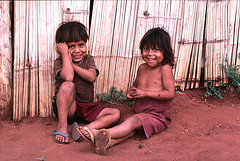 A study by Scheper-Hughes, published in 1992 and conducted in a slum in Brazil over a period of 25 years, revealed an average of 200 deaths per one thousand children born.
Nigh of these deaths were due to indirect or passive forms of infanticide. Mothers preferred their children to be fast, clever, active, and precocious in their development, and children showing contrary features, would not receive medical care when they were ill or were given less food than their siblings, since they were considered every bit showing less aptitude for life.
Another cause of infanticide associated with unwanted pregnancies may be illegitimate births, which means that the pregnancy is not the result of a marriage recognized by the social club. In some cultures such births are highly undesirable, since they tin can dishonor a family.
Behavior derived from biological causes
Some societies still perform infanticide due to beliefs derived from biological causes. For case, in some communities in Republic of benin (Africa) children built-in with a disability are killed, equally negative magical effects or evil spells are attributed to their nascency. The same behavior apply in cases of twin and albino children nascency. Regarding twins, sometimes only the second child is killed or information technology is given to another family (e.one thousand. Quijo people in Republic of ecuador).
Female infanticide
Female infanticide is the nearly common form of infanticide, both present and in the past. This do is mainly due to the fact that, in some cultures, males are considered to be socially more valuable than women. Moreover, female infanticide is sometimes related to the control of the population.
For example, the UN World Report on Violence Against Children conducted amid ane,000 women in Bharat revealed that infanticide was the cause of 41% of deaths among newborn girls.
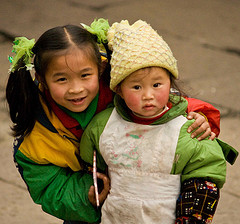
In China, infanticide is also practiced, mainly due to the one-child policy (fifty-fifty though it existed before), which states that each couple can accept merely one child. Many parents prefer to have an abortion before the birth, if they know that the child is a daughter. However, among people who practice non have this possibility, infanticide at birth can be performed.
This practice goes straight against the Right to Life due to gender bias, it peculiarly violates the Rights of girls.
Female infanticide and abortions accept caused a peachy imbalance between the sexes in some regions. In 2007, a UN written report estimated that approximately 100 million girls worldwide had disappeared, 80 million of them in China and India. In the future, this could lead to an increment in girls trafficking or to forcing women to marry more than than one human being.
Written past: Natalia López
Translated by: Krzysztof Turczyn
Review past: Sophie Narayan
- Right lo Life
- Focus: Girls' Rights
- Focus: Cultural practices
- Other focuses
- Child Rights International Network (CRIN); Forms of violence: Infanticide
- Paulo Sérgio Pinheiro; World Written report on Violence Against Children (Un)
- Marvin Harris; Introduction to full general Anthropology. Madrid: Alianza Editorial, [1981] 2009
- North. Scheper-Hughes; Death without weeping: the violence of everyday life in Brazil. Berkeley, CA, USA: Academy of California Press, 1993
- Alexandra Brevis; Anthropological perspectives of infanticide
- M.M. García Campillo; Ethnographic and etnohistorical data on infanticide in traditional societes, 2012 (in Spanish)
- Le Droit de vivre des filles: foeticide féminin et infanticide des filles (in French)
- The Society of the Prevention of Infanticide
pedersoncambactint1995.blogspot.com
Source: https://www.humanium.org/en/infanticide/
0 Response to "What Happens if You Kill Your Baby... Who Would Know"
Post a Comment